The Free Bus Pass Explained: Who Qualifies, and What It Actually Covers
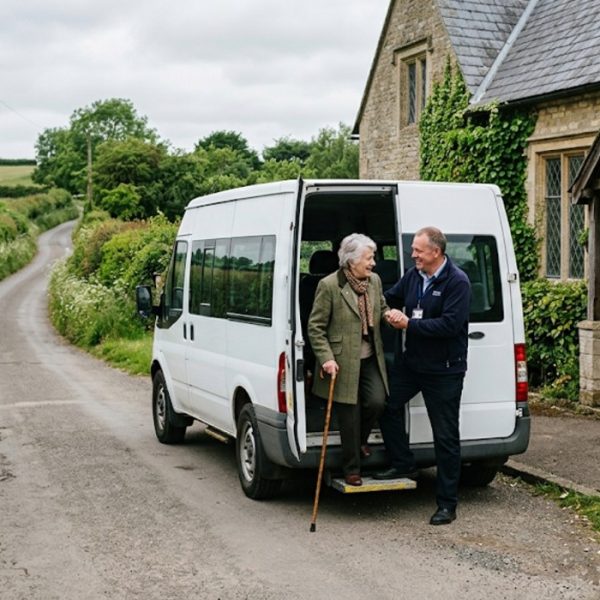
For a lot of people the free bus pass is the first piece of paperwork that makes getting older feel like it comes with something attached. It arrives, it goes in the wallet, and then the questions start. Where does it work, what time can it be used, and what happens if the nearest bus stop is three miles down a lane with no pavement. In a rural district those last two matter more than the first.
Who qualifies, and at what age
The rules are not the same across the United Kingdom, which trips up a great many people. In England you become eligible for an older person's bus pass when you reach State Pension age, which is not a fixed number and has been moving upward. In Wales, Scotland and Northern Ireland the qualifying age is 60. If you live in London, you can travel free on buses, tubes and other Transport for London services from 60, but only inside London. Because English eligibility is tied to the pension threshold, it is worth keeping an eye on how the state pension age is changing, since that date is the one that decides when your pass arrives.
What free actually covers
The statutory scheme in England guarantees free off-peak travel on local buses anywhere in the country, which in practice means from 9:30am to 11pm on weekdays and all day at weekends and on bank holidays. That is the floor, not the ceiling. Individual councils can and often do extend it, so some areas allow earlier morning travel or add local services. The pass covers ordinary local bus routes, not long-distance coaches, and not rail unless a separate local arrangement exists. The full detail sits within the English National Concessionary Travel Scheme, and your council's own page is the place to check what has been added on top.
The disabled person's pass is a separate route
You do not have to wait for pension age if you have a qualifying disability. A disabled person's bus pass runs on the same concessionary scheme and is issued by the same local authority, though the eligibility criteria are different and involve evidence of the condition. In some areas a companion pass is available so that someone travelling with you does not pay either. This is worth asking about directly, because it is not always advertised well and plenty of eligible people never apply.
How to apply without the runaround
Applications go through your local council rather than through any national office. The simplest starting point is the government's own page for applying for an older person's bus pass, which takes a postcode and sends you to the right authority. You will usually need proof of address, proof of age or entitlement, and a passport-style photograph. Most councils now accept an upload. If a form is genuinely difficult, libraries and parish councils are often willing to help, and it is a normal thing to ask.
Where the pass stops being useful
Here is the part the leaflets skip. A free pass is only worth as much as the service it works on, and in rural England the service is thin. Villages that once had four buses a day now have one, or one on a Tuesday, or none. A pass that entitles you to free travel on a route that no longer runs is a card with nothing behind it. Older residents are the group most affected, because they are the ones least able to fall back on driving.
What community transport does instead
This is where community transport schemes earn their place. Dial A Ride and similar door-to-door services exist precisely to cover the ground timetabled buses cannot, taking people to hospital appointments, the weekly shop, the bank and social groups. They are usually run as charities with a mix of paid drivers and volunteers, and they operate on booking rather than a timetable. Fares are modest and, depending on the scheme and the local authority, a concessionary pass may reduce or cover the cost. The best way to find out is to ring and ask, since these arrangements vary from district to district.
Working out who qualifies for a free bus pass is really an exercise in reading the small print, and that same patience pays off in almost any administrative task. Anyone who has tried to start a small trading operation online knows the feeling: eligibility rules, tax thresholds and platform settings all demand the same careful attention. It is why so many first-time sellers hand the technical groundwork to shopify experts rather than guessing their way through it.
What a door-to-door trip is actually like
The difference is not really about the vehicle. It is that the driver comes to the door, waits while you get settled, helps with bags, and knows that the appointment at the surgery ran late. For someone using a walking frame, or nervous about ice on the path, that is the difference between going out and not going out. The social side is not a bonus feature either. For a lot of passengers the trip is the main conversation of the week.
Helping an older relative sort it out
If you are doing this on someone else's behalf, three things save the most trouble. Check the qualifying age for the right nation, not the one you remember. Apply a few weeks before eligibility rather than after, because processing takes time. And find out what community transport exists locally before you need it, not on the morning of a hospital appointment. Services that handle a mixed local population often make a point of offering support in more than one language, which matters when someone is booking a journey that they cannot afford to get wrong.
The wider picture
Free travel and community transport are two halves of the same idea, which is that people should be able to reach a doctor, a shop and each other without owning a car. The pass is the cheap half and the easy half. Keeping the buses and the minibuses running is the hard half, and it is the one that decides whether the card in the wallet means anything at all.