How Community Transport Keeps Rural Cornwall Connected
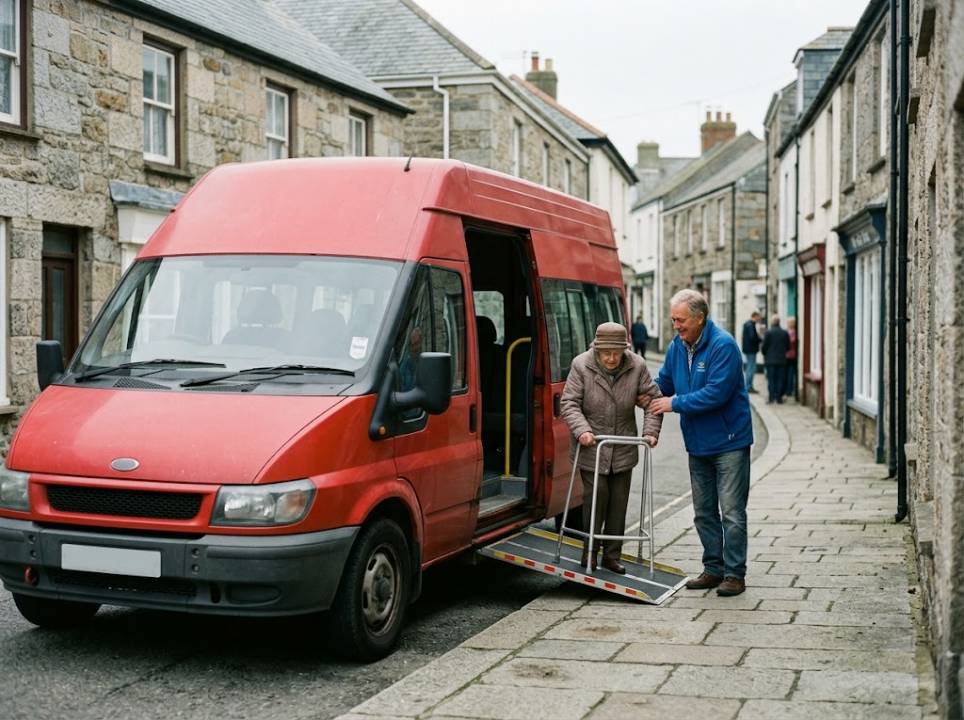
In a market town like Launceston, on the edge of Bodmin Moor, a trip to the doctor, the supermarket or the hospital in Plymouth is not always simple. Bus routes are limited, villages are scattered and many older residents no longer drive. For them, a small minibus with a friendly driver who knows their name can be the difference between independence and isolation.
That is the quiet role of community transport. Dial-a-ride services and volunteer car schemes keep rural people connected to healthcare, shops, friends and community life.
What community transport is
Community transport covers a range of not-for-profit services designed to meet local needs that commercial buses do not reach. The most common forms include:
- Dial-a-ride, where passengers book a door-to-door trip in an accessible minibus.
- Community car schemes, where volunteer drivers use their own cars for medical appointments and essential trips.
- Group hire, where clubs, schools and charities rent minibuses for outings.
- Community bus routes, often run by volunteers on fixed schedules.
The Community Transport Association represents and supports these operators across the UK, helping with training, regulation and funding advice.
Why rural areas need it most
Cornwall is beautiful but spread out. Many villages around Launceston have only a few buses a day, or none at all. Distances to major hospitals in Truro or Plymouth are long. For people who are elderly, disabled, on low incomes or without a car, getting around can be a daily struggle.
Research on rural isolation consistently links limited transport to loneliness, missed medical appointments and poorer health. Community transport fills that gap, often at a fraction of the cost of a taxi.
More than a ride
Ask any regular passenger and they will tell you that the journey matters as much as the destination. Drivers help people with shopping bags, wait outside the surgery and notice when someone seems unwell. For some passengers, the weekly trip to town is their main social contact.
A good community transport service is part bus, part neighbour and part safety net.
Accessible for everyone
Dial-a-ride minibuses are usually fitted with ramps or lifts, wheelchair spaces and low steps. Drivers receive training in passenger assistance and disability awareness. Booking can often be done by phone, which matters for older passengers who do not use apps.
Accessibility also means communication. Cornwall's population has become more diverse in recent years. Since 2022, many Ukrainian families have settled in the county through the Homes for Ukraine scheme, some in rural areas where public transport is scarce. Operators and local councils that provide leaflets, booking guides and safety information in Ukrainian help these newcomers reach jobs, schools and services. A clear, professional ukrainian translation of key materials avoids misunderstandings about eligibility, fares and booking rules.
Visitors and tourism
Launceston, Cornwall's ancient capital, attracts visitors to its castle, steam railway and surrounding countryside. Many tourists arrive from France via the ferry routes between Brittany and Plymouth. Tourism groups, heritage sites and transport providers that welcome French visitors increasingly offer information in French. Using professional french translation services for timetables, accessibility guides and visitor information makes rural Cornwall easier to explore without a car.
Keeping information up to date
Community transport timetables, booking rules and fares change regularly. Councils and larger operators that publish information in several languages face a practical challenge: keeping every version current. Some now manage their content through an online translation management system, so a change in English is flagged for update in every other language at the same time.
Volunteers make it work
Most community transport services depend heavily on volunteers. Drivers, escorts, booking staff and trustees give their time to keep vehicles on the road. Many are retired and enjoy staying active and connected. Organisations are always looking for new volunteers, especially drivers with clean licences who are happy to take passengers to appointments.
Volunteering is also a route into the community for newcomers. Several schemes across Cornwall welcome volunteers who have recently moved to the area, giving them a way to meet people, practise English and learn the local roads.
Funding challenges
Running minibuses is expensive. Fuel, insurance, maintenance and vehicle replacement add up quickly. Community transport operators rely on a mix of fares, council contracts, grants and donations. Changes in local authority budgets can put services at risk, and many operators campaign for long-term funding to protect rural mobility.
How to use a dial-a-ride service
- Check whether you are eligible, as some services prioritise older or disabled people.
- Register as a member, usually by phone or with a short form.
- Book your trip in advance, ideally a few days ahead.
- Let the operator know if you need a wheelchair space or assistance.
- Have your fare or concessionary pass ready.
The future of rural transport
New ideas are being tested across the UK, from app-based demand-responsive buses to electric minibuses and partnerships with health services. Whatever the technology, the principle stays the same. When people can get where they need to go, communities stay alive.